How to Choose a Backpacking Tent in 2026: Weight, Season, and Space Decoded
As an Amazon Associate I earn from qualifying purchases. Prices and availability are accurate as of the date/time indicated and are subject to change.
How we picked: This guide compares options using published
specifications, verified owner-review patterns and reputable expert testing.
We label clearly what is hands-on vs research-based, and never present others'
testing as our own.
Our top picks
| Rank | Product | Name | Why we picked it | Buy |
|---|---|---|---|---|
| Top pick |  | Naturehike Mongar 2-Person Backpacking Tent (light, freestanding, 3-season) | Check price | |
| Runner-up |  | Marmot Crane Creek 2P/3P Backpacking Tent (roomy, reliable) | Check price | |
| Also great |  | Forceatt 2/3/4-Person Camping Tent (budget, more space) | Check price |
A tent listing throws a dozen numbers at you, but only three trade-offs decide whether you’ll love the tent on the trail: weight vs livability, season rating, and real usable space. Nail those and the rest (color, pole geometry, marketing names) barely matters. Get them wrong and you’ll either haul a heavy tent you resent or shiver in one that’s under-built for your trips. Here’s how to choose on what counts.
The three trade-offs that matter
- Weight vs livability. Every gram you cut usually costs you interior room, headroom, or durability. Ultralight tents are glorious on long miles and cramped in a storm; roomier tents are comfier and heavier. Pick your side based on trip length and how much you value comfort at camp.
- Season rating. 3-season (spring–fall) covers the vast majority of backpacking — good ventilation, rain protection, not built for heavy snow. 4-season adds strength and warmth for winter/alpine, at a weight and ventilation penalty most people never need.
- Capacity, honestly. Tent “person” ratings are tight. A “2-person” tent fits two adults shoulder-to-shoulder with no gear room. Sizing up one person (a 2P for one, a 3P for two) is the single best comfort upgrade if you can carry it.
Matching a tent to your trips
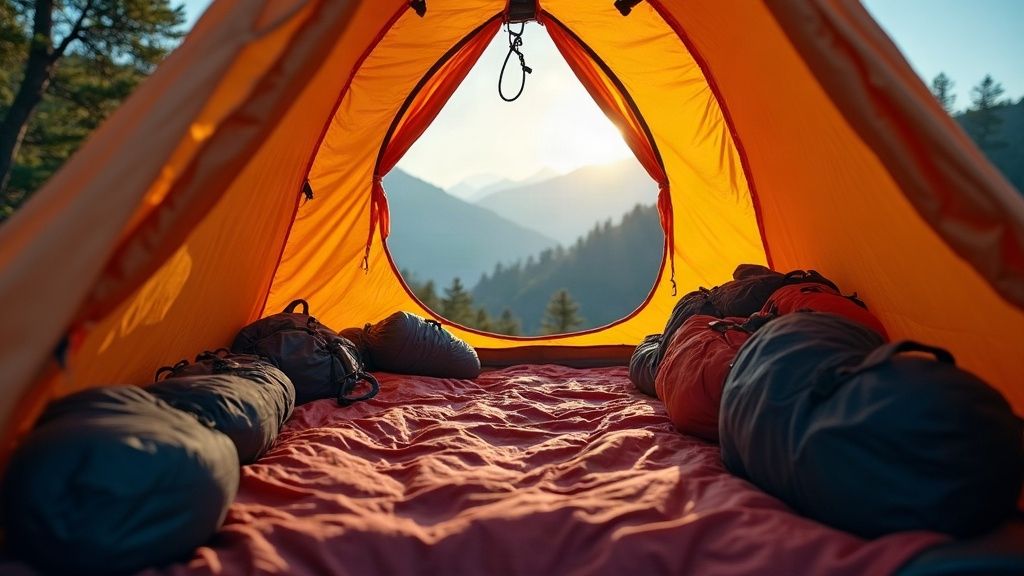
- Long miles, weight-focused, 3-season: a light freestanding tent like the Naturehike Mongar balances low weight with real livability. Our 2-person backpacking tent guide ranks the options.
- Comfort and durability over grams: a roomier tent like the Marmot Crane Creek trades some weight for space and reliability — good for shorter trips or two people who want elbow room.
- Budget or occasional trips: the Forceatt gives more space for less money; heavier, but a fine entry into backpacking without overspending.
What size backpacking tent should I get?
Size up one person from your group if weight allows: a 2-person tent for solo use, a 3-person for two. Person ratings assume bodies with no gear, so the extra capacity buys you room to store packs and move — usually the best comfort-per-ounce you can buy. Only go exact-fit if you’re counting every gram.
Do I need a 4-season tent for backpacking?
Almost certainly not. 3-season tents cover spring through fall, which is when most people backpack, with better ventilation and lower weight. Buy 4-season only if you specifically camp in winter, snow, or exposed alpine conditions — otherwise you’re carrying weight and sweating in a tent built for a season you don’t hike.
How light should a backpacking tent be?
“Light enough that you’ll still bring it, heavy enough to survive your conditions.” A ballpark for a livable 3-season 2-person tent is roughly 3–5 lb; sub-3 lb enters ultralight territory (more money, less room). Don’t chase the lowest number past the point where the tent gets miserable to live in.
Out on the trail
Decide your weight-vs-comfort priority, stick to 3-season unless you truly winter camp, and size up one person for livability. Then pick a tent in that lane — light freestanding (Naturehike Mongar), roomy (Marmot), or budget (Forceatt). Match it to your trips, not a spec sheet, and check the live listing for packed weight and floor dimensions. New to the whole kit? Our beginner backpacking checklist puts the tent in context, and how to stay warm backpacking covers the sleep system that pairs with it.