Best 2-Person Backpacking Tents (2026): 3 Honest Picks Across Price Tiers
As an Amazon Associate I earn from qualifying purchases. Prices and availability are accurate as of the date/time indicated and are subject to change.
The short answer
If you only want one recommendation: Naturehike Mongar 2P Ultralight Backpacking Tent (3-Season). For most weekend/multi-day backpackers, the Naturehike Mongar is the correct pick: genuinely lightweight, free-standing (pitches on hard ground where stakes don't drive), 3-season rating covers most trips, and the price is dramatically lower than name-brand equivalents. Buy the Marmot only if you're doing multi-week thru-hikes where brand warranty matters; buy the Forceatt only as a starter to test whether backpacking is a hobby you'll continue.
Check price on Amazon → How we picked: This guide compares options using published
specifications, verified owner-review patterns and reputable expert testing.
We label clearly what is hands-on vs research-based, and never present others'
testing as our own.
Our top picks
| Rank | Product | Name | Why we picked it | Buy |
|---|---|---|---|---|
| Top pick |  | Naturehike Mongar 2 Person Ultralight Backpacking Tent, 3-Season | Best value ultralight — free-standing, double-layer, dramatic price advantage over name brands. | Check price |
| Runner-up |  | MARMOT Crane Creek 2P/3P Camping and Backpacking Tent | Best brand-backed pick — Marmot warranty coverage and long-term parts availability worth the premium for serious/frequent backpackers. | Check price |
| Also great |  | Forceatt 2/3/4 Person Waterproof Backpacking Tent | Best starter tent — lowest price, size options, adequate for occasional weekend use. Not for serious backpacking. | Check price |
📑 Table of contents
- Weight — the single spec that changes your trip experience
- Season rating — what “3-season” actually means
- Free-standing vs. non-free-standing — the pitching-site tradeoff
- Livable floor area — the spec marketers hide
- Who should buy which — decision framework
- Vestibules — the underappreciated feature
- Common first-year mistakes with backpacking tents
- Comparison
- Related guides
Backpacking tents get judged on three specifications that actually matter: packed weight (does it fit your pack without dominating it), season rating (does it handle the weather you’ll actually see), and livable floor area (do 2 people plus gear actually fit inside without touching walls).
Every other spec on the marketing page is secondary. Below, we cover what each of those really means in practice, then three verified picks for different backpacker profiles.
Weight — the single spec that changes your trip experience
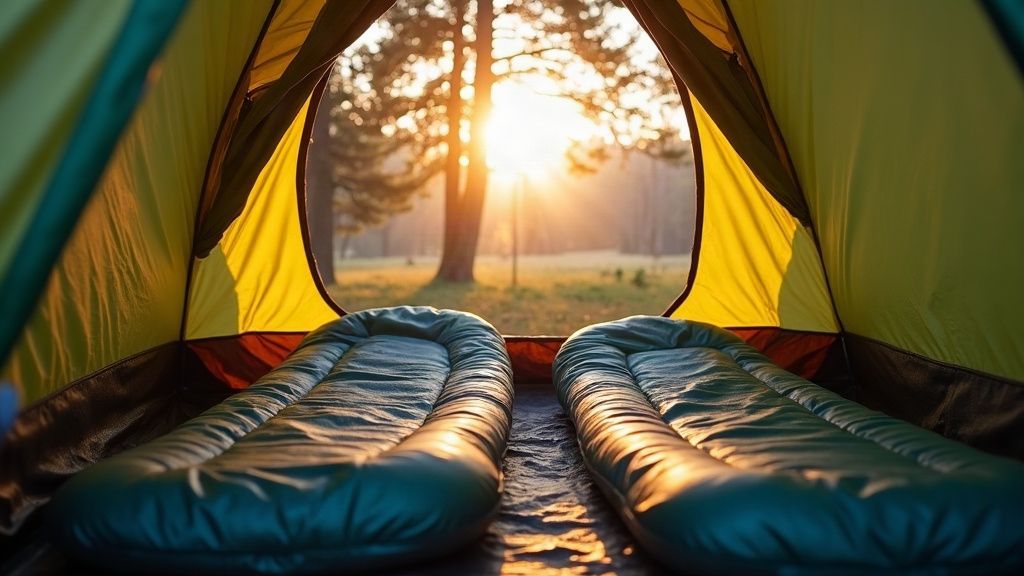
Backpacking tents range from 1.5 lbs (ultralight thru-hiking models, single-wall, minimal features) to 6+ lbs (car-camping-oriented “backpacking” tents that people occasionally carry).
For context, 3 lbs of tent weight over a 15-mile day translates to roughly 200-300 extra calories burned, and — more importantly — meaningful shoulder/back fatigue by mile 10. Over a multi-day trip, cumulative fatigue compounds.
Rules of thumb:
- Under 3 lbs: genuine ultralight, worth the price premium for thru-hikes (100+ miles) or backpackers who prioritize pace
- 3-4 lbs: sweet spot for weekend/multi-day trips — meaningfully lighter than “camping tents” without ultralight fragility
- 4-5 lbs: casual backpacking, acceptable for occasional trips, will feel heavy over 20+ mile days
- 5+ lbs: really a camping tent that markets itself as backpacking
The Naturehike Mongar sits in the 3-4 lb range (ultralight-adjacent without full ultralight pricing). Marmot Crane Creek and Forceatt both sit in the 4-5 lb range.
Season rating — what “3-season” actually means
Tents are rated by seasons they’re built to handle:
- 3-season (all three picks above): spring, summer, fall in moderate conditions. Rain, moderate wind, temperatures above freezing. Not designed for snow load or sustained sub-freezing weather.
- 3-season “plus”: adds some snow-shedding capability, heavier poles. Marketed as “3+ season” or “convertible.”
- 4-season / mountaineering: designed for snow load, high winds, well-below-freezing temperatures. Heavier fabric, more poles, less ventilation (major downside in summer). Usually 5-8 lbs.
Buying 4-season for 3-season use is overpaying for capability you’ll never use, plus dealing with condensation from over-insulated design in mild weather. Buying 3-season for occasional snow is genuinely unsafe — the poles/fabric aren’t rated for snow load and can collapse.
For 90% of home-country backpacking (US Appalachian, Rockies, Sierra in summer, most European trails), 3-season is correct.
Free-standing vs. non-free-standing — the pitching-site tradeoff
Free-standing tents (Naturehike Mongar) stand up as soon as poles are inserted, no ground stakes required. You CAN stake them out for stability in wind, but they hold their shape unstaked.
Non-free-standing tents (typically ultra-ultralight designs, trekking-pole shelters) rely on stakes or trekking poles to hold shape. Lighter (~1 lb saved), but genuinely unpitchable on:
- Rocky ground where stakes don’t drive
- Solid granite ledges (common in high-Sierra, White Mountains)
- Snow (stakes don’t hold)
- Compacted-clay campgrounds
Free-standing is more forgiving for the average weekend backpacker. Non-free-standing rewards experience and site selection.
The Marmot Crane Creek and Forceatt are both free-standing designs as well — three picks, all free-standing, all forgiving for casual use.
Livable floor area — the spec marketers hide
Manufacturers list “2-person” or “3-person” capacity, but the actual floor dimensions vary. Real usable interior:
- ~28 sq ft floor + peak height 40”+: comfortable for 2 people + moderate gear inside
- ~25 sq ft floor + peak height 36-40”: tight for 2 people, gear stored in vestibule
- ~20 sq ft: single-person practical, “2P” marketing rating optimistic
Rule: if manufacturer lists floor area, subtract 15-20% for practical use (wall angle reduces effective floor). If they only list “2P” or “3P” without square footage, the actual floor is usually on the tighter side.
The Marmot Crane Creek is available in both 2P and 3P — if you plan to use it primarily as a 2-person tent, the 3P size gives real usable interior at moderate weight cost.
Who should buy which — decision framework
Buy the Naturehike Mongar if:
- You’re a regular weekend / multi-day backpacker
- Weight matters — you feel the difference between a 3 lb tent and a 5 lb tent by mile 10
- You want free-standing flexibility for varied campsite terrain
- You accept a lesser-known brand for dramatic cost savings vs. Marmot/Big Agnes equivalents
- You’ll take reasonable care of the fabric (not the tent for someone who throws gear around campsites)
Buy the Marmot Crane Creek if:
- You’re doing multi-week trips or thru-hikes where reliability matters more than weight
- Warranty coverage is a real consideration (Marmot has US-based support, actual repair service)
- You want the 3P size for real 2-person comfort with gear inside
- The brand’s decade+ track record in this specific tent line matters to you
Buy the Forceatt if:
- You’re brand-new to backpacking and want to test whether you’ll continue before investing $200+
- You do occasional 1-2 night trips, not serious backpacking
- Size flexibility matters (2/3/4-person versions available)
- You accept shorter expected lifespan for lower upfront cost
Vestibules — the underappreciated feature
A vestibule is a covered but non-floor area outside the tent’s main body, formed by the rainfly. It’s where you store wet boots, backpack, and cooking gear (weather permitting). Without a vestibule, all that gear either stays outside in the rain, or takes up floor space inside the tent.
The Marmot Crane Creek and Naturehike Mongar both include vestibules. Forceatt varies by size version — verify before buying if vestibule matters to you.
For 2 people, a single vestibule (one door) means climbing over your tentmate to use the bathroom at night. Two-door tents with two vestibules cost slightly more but genuinely improve the experience over multi-night trips.
Common first-year mistakes with backpacking tents
-
Setting up for the first time in the field — most tent designs have quirks (pole rotation, rainfly orientation, guy-line routing). Pitching for the first time at your campsite in fading light or rain is stressful and often results in a bad pitch. Practice at home in the yard 2-3 times first.
-
Skipping the footprint — a ground cloth (“footprint”) sized to your tent floor extends fabric lifespan dramatically. Sharp rocks, sticks, and dirt-embedded pebbles poke tiny holes in floor fabric over dozens of pitches. A $30 footprint saves a $250 tent.
-
Not seam-sealing new tents — many mid-range tents ship without seam-sealing on the fly. Small manufacturers rely on the buyer to apply seam sealer before first use. Check the manual. A tent that leaks at seams during your first rainstorm is a first-week disaster that’s completely avoidable.
-
Storing wet — tents mildew fast when packed wet. Never store your tent packed away wet longer than 24 hours; unroll and fully dry (indoor floor for 24-48 hours) before long-term storage. Mildew permanently degrades floor fabric.
-
Wrong stake type for your terrain — packaged aluminum stakes work in dirt/loam but bend in rocky ground. Titanium stakes cost more but handle rockier campsites. If your trips are in rocky terrain, budget $15-20 for a set of better stakes separately.
Comparison
| Model | Weight class | Free-standing | Best for |
|---|---|---|---|
| Naturehike Mongar 2P | 3-4 lbs | Yes | Regular weekend backpacker, weight-conscious |
| Marmot Crane Creek 2P/3P | 4-5 lbs | Yes | Serious/frequent backpacker, brand support |
| Forceatt 2/3/4P | 4-5 lbs | Yes | Starter tent, occasional use |
Related guides
- Sleeping bag temperature ratings actually explained