Sleeping Bag Temperature Ratings: Comfort vs. Survival Actually Explained (2026)
As an Amazon Associate I earn from qualifying purchases. Prices and availability are accurate as of the date/time indicated and are subject to change.
How we picked: This guide compares options using published
specifications, verified owner-review patterns and reputable expert testing.
We label clearly what is hands-on vs research-based, and never present others'
testing as our own.
Our top picks
| Rank | Product | Name | Why we picked it | Buy |
|---|---|---|---|---|
| Top pick |  | Teton 20°F / 5°F Sleeping Bag, Mummy, Backpacking | Available in 20°F and 5°F ratings — mummy cut for backpacking use. Real comfort temp is typically 15-20°F warmer than the rated number. | Check price |
| Runner-up |  | Naturehike Lightweight Compact Sleeping Bag, 32°F Envelope | 32°F envelope-cut — designed for warm-weather backpacking, more roomy than mummy but heavier per warmth unit. | Check price |
| Also great |  | REDCAMP Cotton Flannel Sleeping Bag, Cold Weather Envelope | Cotton flannel — heavier and less compressible than synthetic backpacking bags, better for car camping than actual backpacking where pack weight matters. | Check price |
📑 Table of contents
Sleeping bag temperature ratings are one of the most misread specs in outdoor gear. The number printed on the bag isn’t the temperature you’ll be comfortable at — it’s usually a LIMIT rating (below which you might survive but won’t sleep well) rather than a COMFORT rating (below which you’ll actually get warm restful sleep).
Comfort rating vs. lower-limit rating vs. extreme rating
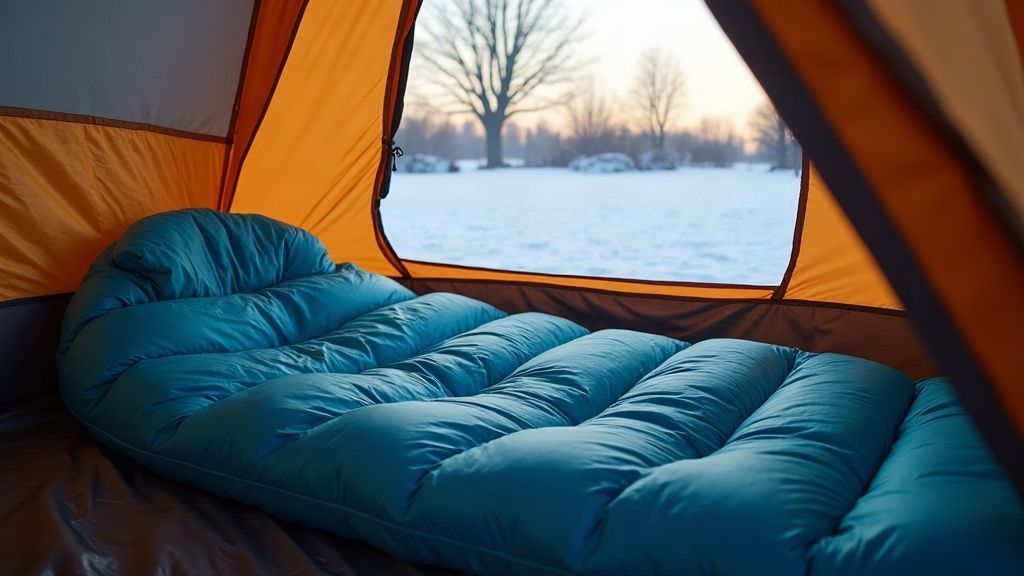
The EN/ISO 23537 standard (which most reputable bag manufacturers publish against) gives three ratings per bag:
- Comfort: temperature at which a “standard” cold sleeper stays comfortably warm all night — this is the number YOU should shop by if you sleep cold
- Lower-limit: temperature at which a “standard” warm sleeper stays warm (curled up, not shivering) — often what marketing calls “the rating”
- Extreme: survival — you’re alive after 6 hours but not comfortable, at risk of cold injury
The advertised temperature is usually the lower-limit or a marketing-friendly single number, NOT the comfort rating. Rule of thumb: add 15-20°F to the advertised rating to get your actual comfortable use temperature.
Mummy vs. envelope cut — real weight-vs-warmth tradeoff
A mummy bag (like the Teton pick) tapers from shoulders to feet, minimizing empty airspace your body has to heat. This is meaningfully warmer per gram of insulation than an envelope bag but more restrictive to move in — some sleepers hate the feel and never adapt. An envelope bag (like the Naturehike and REDCAMP picks) has more room to move but heats less efficiently. For backpacking where every ounce matters, mummy wins on weight-to-warmth ratio; for car camping where weight doesn’t matter, envelope’s comfort often wins.
Down vs. synthetic fill — the actual practical difference
Down insulation compresses smaller and lasts longer than synthetic (both good for backpacking) but loses insulating value dramatically when wet. Synthetic insulation is heavier and bulkier for the same warmth rating but keeps insulating even when damp. For summer/dry conditions, down wins on pack size; for humid conditions, wet river crossings, or shoulder-season trips with rain risk, synthetic’s wet-performance is the practical safer choice. The Teton pick above is a common synthetic option; check specific insulation type on each bag before assuming.
When cotton flannel makes sense (and doesn’t)
Cotton flannel bags (like the REDCAMP pick) are comfortable, cheap, and durable — great for car camping, sleepovers, or as a hostel sleep sack. They are genuinely NOT suitable for backpacking: cotton is heavy per warmth unit, absorbs moisture (loses insulation catastrophically when damp), and doesn’t compress well. Buying a cotton bag for backpacking is a mismatch that shows up on the trail as a sore back from extra pack weight.
Comparison
| Bag | Rating | Cut | Best for |
|---|---|---|---|
| Teton 20/5°F | 20°F or 5°F | Mummy | Backpacking, cold-weather trips |
| Naturehike 32°F | 32°F | Envelope | Warm-weather backpacking, roominess |
| REDCAMP Cotton Flannel | Varies | Envelope | Car camping only, NOT backpacking |
Related guides
- Best 2-person backpacking tents
- Backpacking stove types compared