What to Eat on a Day Hike (2026): A Meal & Snack Planning Guide
As an Amazon Associate I earn from qualifying purchases. Prices and availability are accurate as of the date/time indicated and are subject to change.
How we picked: This guide compares options using published
specifications, verified owner-review patterns and reputable expert testing.
We label clearly what is hands-on vs research-based, and never present others'
testing as our own.
📑 Table of contents
Most people either over-pack a day hike with food they never touch, or under-pack and hit a wall three hours in — shaky, headachy, and miserable for the walk back. Getting it right isn’t complicated. A day hike runs on steady snacking plus one real meal, and a little planning keeps you energised from the trailhead to the car. Here’s how to think about it.
How much food do you actually need?
A day hike burns roughly 400–700 calories per hour depending on your pace, pack weight, and terrain. You don’t need to replace all of that on the trail — your body has plenty of stored energy — but you do want to keep topping up so you never bonk. A useful rule of thumb:
- Half-day hike (3–4 hours): 1 solid snack plus water is usually enough.
- Full-day hike (6–8 hours): aim for 200–300 calories per hour, split between snacks and a proper lunch.
- Strenuous or cold-weather days: push toward the higher end — cold burns extra calories, and climbing eats through energy fast.
Pack a little more than you think you’ll eat. Leftover food weighs almost nothing; running out ruins the day. If you’re still building your kit, our backpacking checklist for beginners covers how food fits alongside the rest of your essentials.
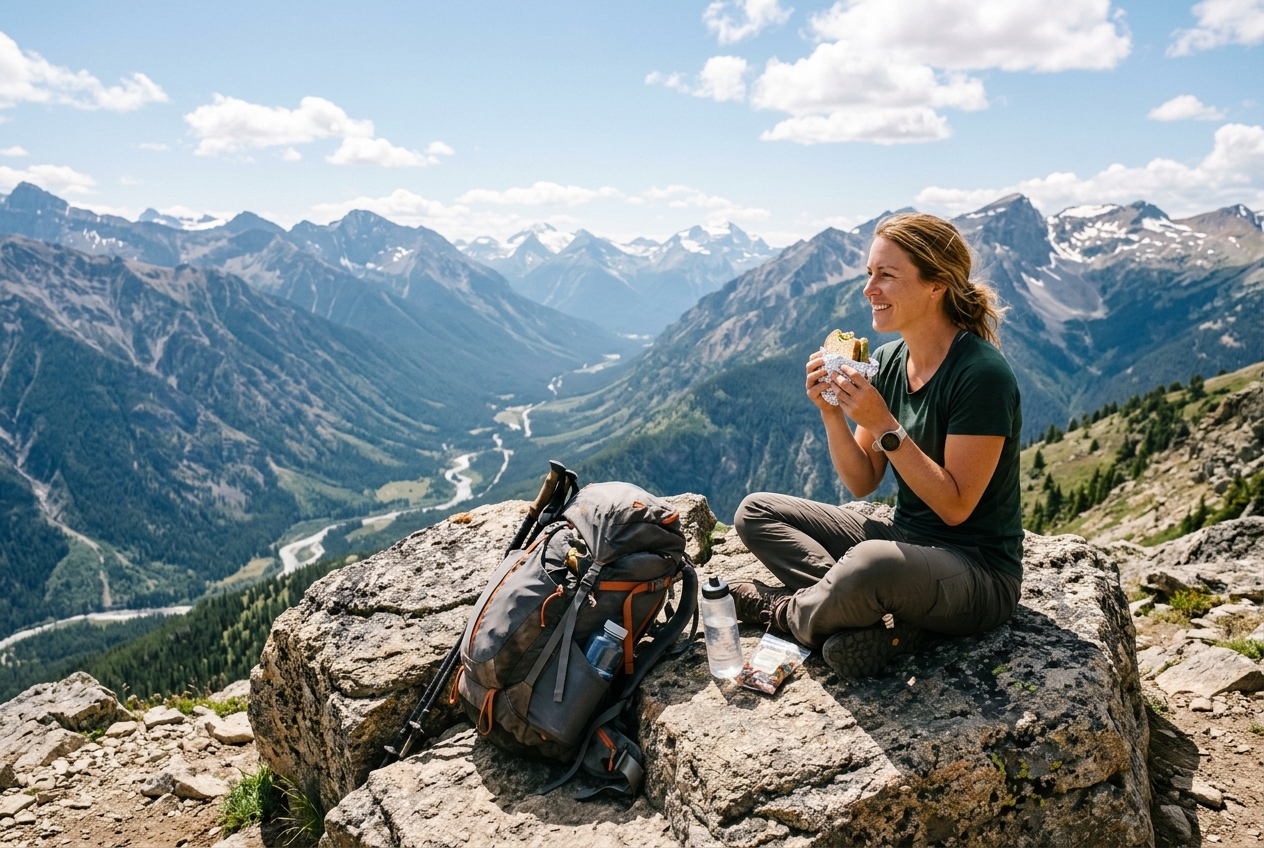
The best day-hike snacks
Good trail snacks share three traits: they’re calorie-dense, shelf-stable, and easy to eat one-handed while walking. The classics earn their place:
- Trail mix. Nuts, seeds, dried fruit, and a little chocolate hit fat, protein, and fast sugar in one handful. Make your own to control salt and sweetness.
- Energy or granola bars. The ultimate no-mess option. Keep two or three within easy reach.
- Fresh fruit. Apples and oranges travel well; bananas get mushy but are great early in the day.
- Jerky or meat sticks. Salt and protein, and they don’t melt or crush.
- Nut butter packets. Squeeze straight into your mouth or onto a cracker for a quick fat hit.
Keep a stash in a hip-belt pocket or the lid of your pack so you snack before you feel hungry — by the time you notice hunger on the trail, you’re already behind.
Lunch that survives your pack
You want a lunch that won’t turn to mush after three hours bouncing around. Sandwiches on sturdy bread (bagels, tortillas, or dense whole-grain) hold up far better than soft white loaf. Wraps are the MVP — roll fillings tightly and they pack flat and eat clean.
Great fillings that don’t need refrigeration for a few hours:
- Hard cheese, cured meat, and mustard in a tortilla
- Hummus with roasted veg or spinach
- Peanut butter and honey (a trail classic that never spoils)
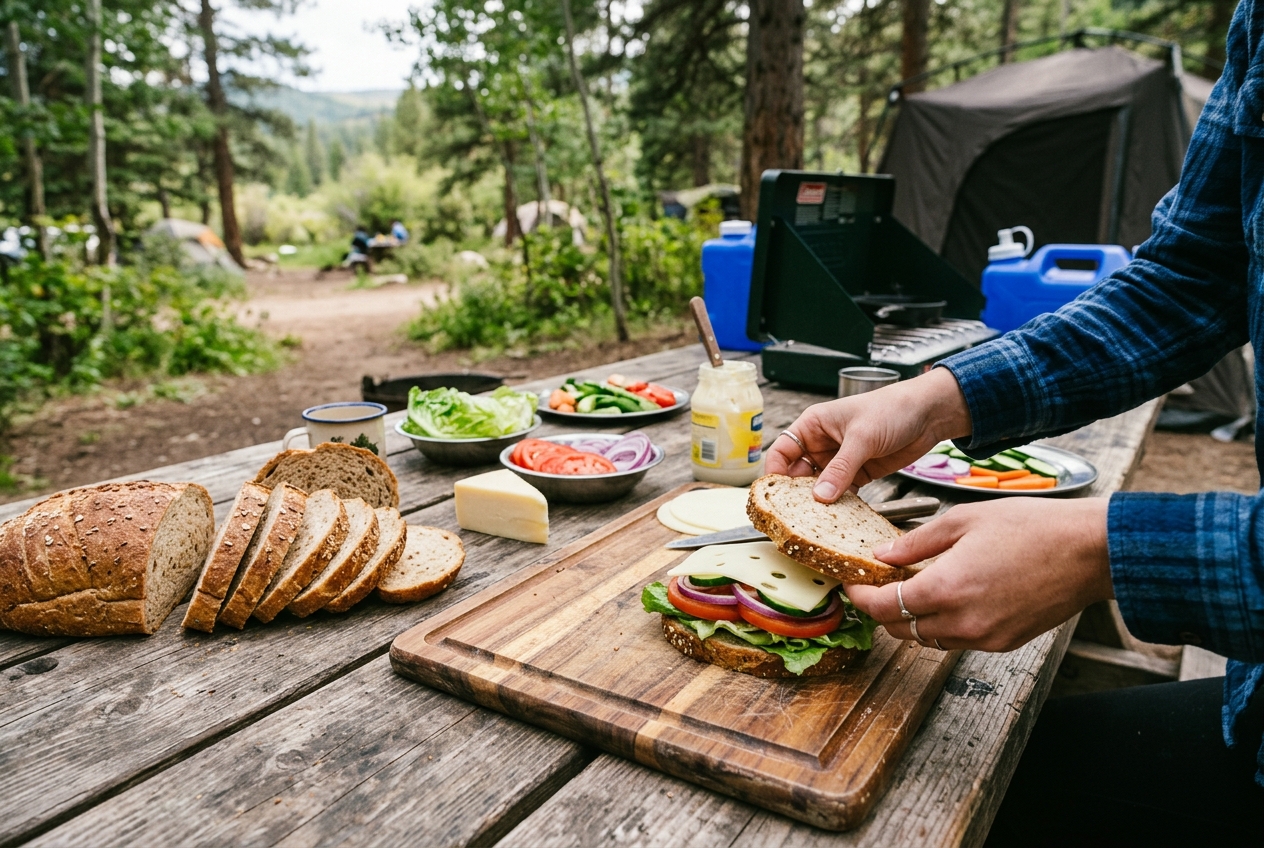
If the weather’s warm, pop your lunch in a small insulated pouch with a mini ice pack for the first few hours. Skip anything with mayo or raw fish on hot days — food safety matters more than variety.
Don’t forget water (and electrolytes)
Food fuels you, but dehydration is what usually causes the mid-hike crash people blame on hunger. Plan on roughly half a litre of water per hour, more in heat or at altitude. On longer or sweatier days, add an electrolyte tablet or a pinch of salty snacks — plain water alone can leave you feeling flat and crampy.
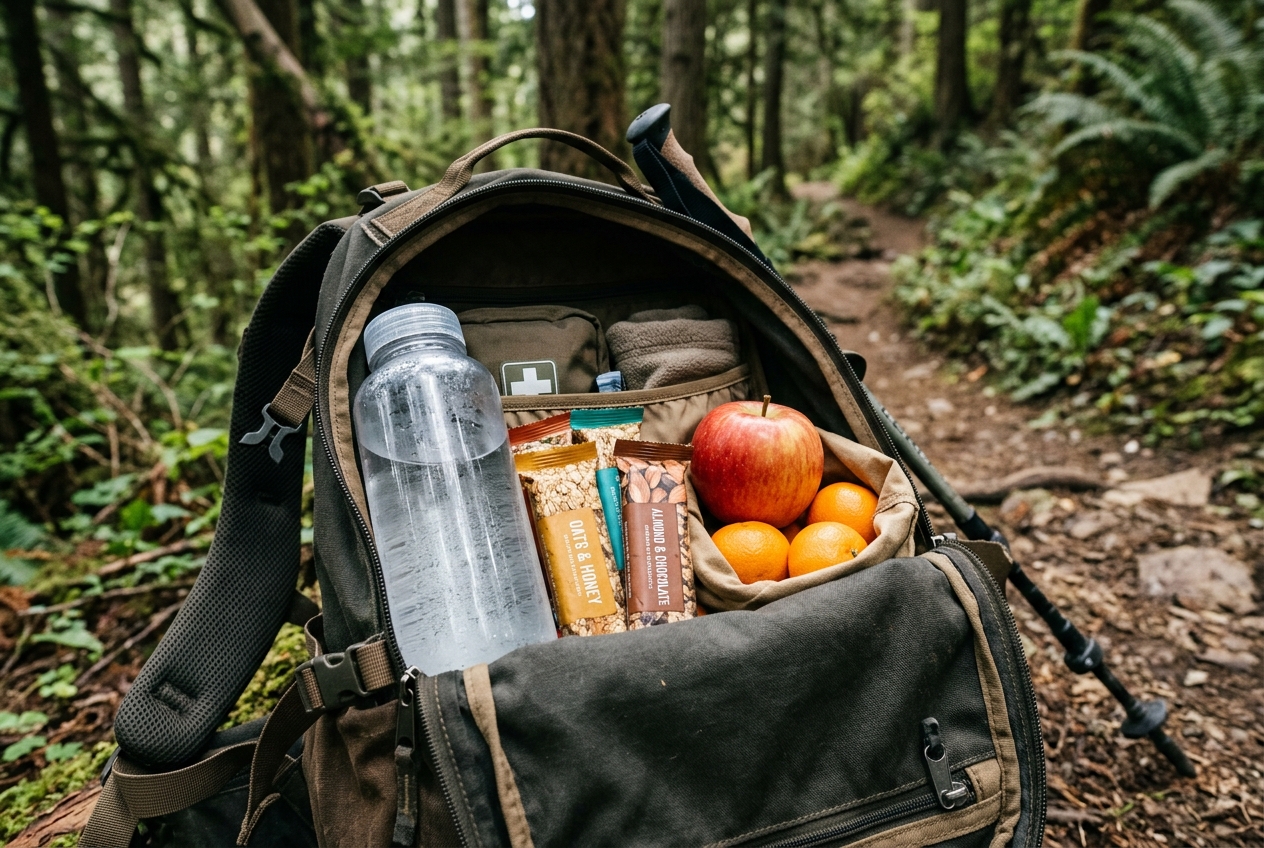
Carry more water than the forecast suggests, and know where any refill sources are on your route. Cold-weather hikers especially forget to drink — the same discipline that keeps you fed keeps you hydrated. If you’re heading out in shoulder season, our guide to staying warm backpacking pairs well with cold-day fueling.
A simple hour-by-hour eating plan
You don’t need a spreadsheet, just a rhythm:
- Before you start: eat a normal breakfast with carbs and protein — oatmeal, eggs, toast.
- First hour: sip water, no need to eat yet.
- Every 45–60 minutes after: a small snack — a handful of trail mix or half a bar.
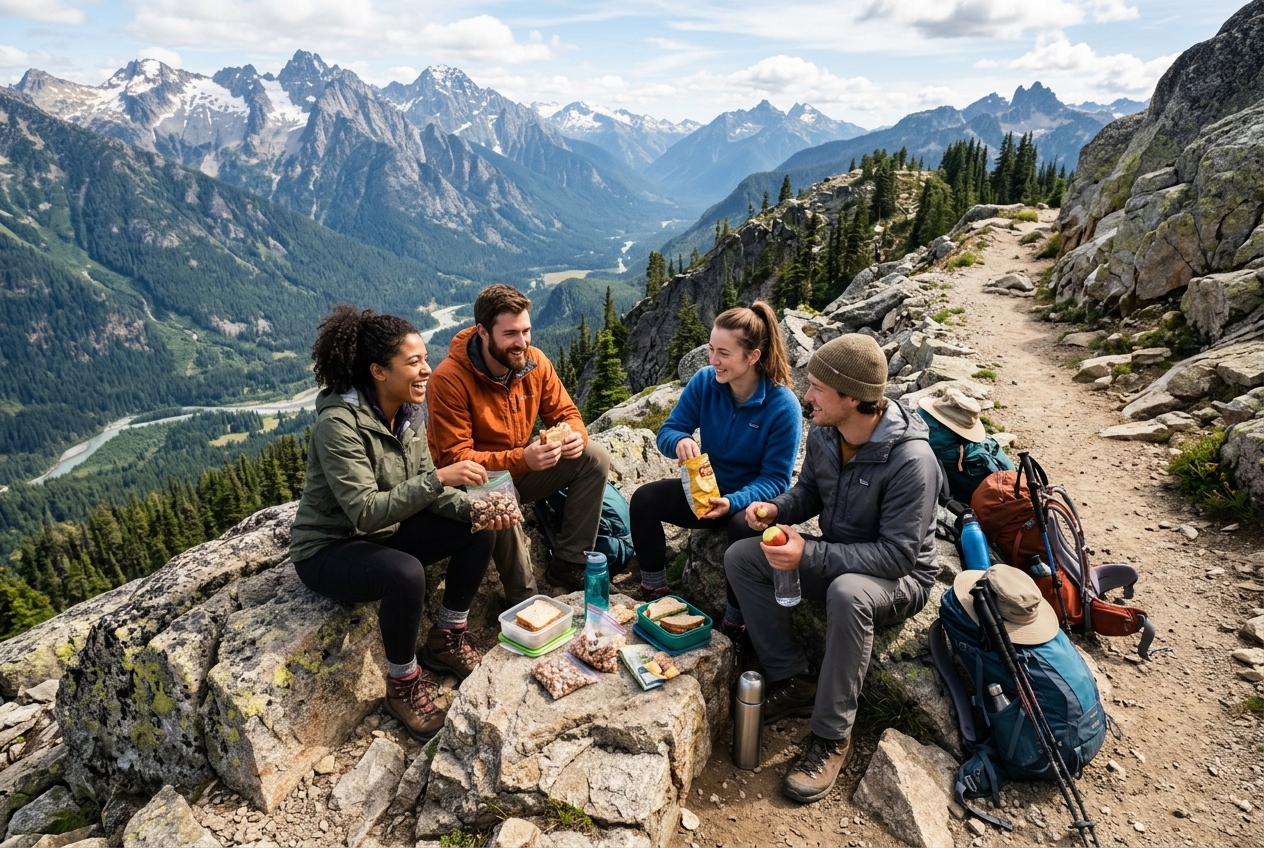
- Midday: your real lunch, ideally at a scenic spot with a view worth stopping for.
- Afternoon: keep snacking on the same schedule; add a caffeinated or sugary treat for the final push if you’re flagging.
- Back at the car: a proper recovery snack with protein helps you feel human again.
Pack it smart
Keep snacks accessible and lunch protected. Use a zip bag or small container so nothing gets crushed, and always pack out every wrapper — day hikes are exactly where leave-no-trace slips happen. If you’re hiking with others, coordinate so you’re not all carrying the same three bars; sharing a spread makes the midday stop far nicer.
The whole system is simple: eat before you’re hungry, drink before you’re thirsty, and carry one real meal plus more snacks than you think you’ll need. Do that, and the food side of your day hike takes care of itself — leaving you free to enjoy the trail.