How to Wash and Store a Sleeping Bag Without Killing the Loft
As an Amazon Associate I earn from qualifying purchases. Prices and availability are accurate as of the date/time indicated and are subject to change.
🔍 How this guide was put together (Editorial Standards)
This guide compares options using published manufacturer specifications, patterns in publicly visible owner reviews, and reputable expert sources. We do not operate a physical testing lab; see our how-we-research page for details.
EDITOR'S PICKS
Top Picks


📑 Table of contents
A sleeping bag keeps you warm because of one thing: loft — the puffy dead air trapped between fibers. Everything you pay extra for (down fill power, synthetic denier, quality baffles) is really about loft. And the way most people wash and store a bag destroys exactly that. A $200 bag stuffed hard for a year in its compression sack ends up warmth-rated one season lighter than when you bought it. It doesn’t have to.
When to wash it
Rarely. Every 20–40 nights of use, or when it visibly needs it. Washing itself stresses the fill, so more washes = more loft loss. In between, spot-clean the collar/hood area (where face oils build up), use a liner going forward, and air the bag out after every trip.
Washing: the rules that matter
| Rule | Down bag | Synthetic bag |
|---|---|---|
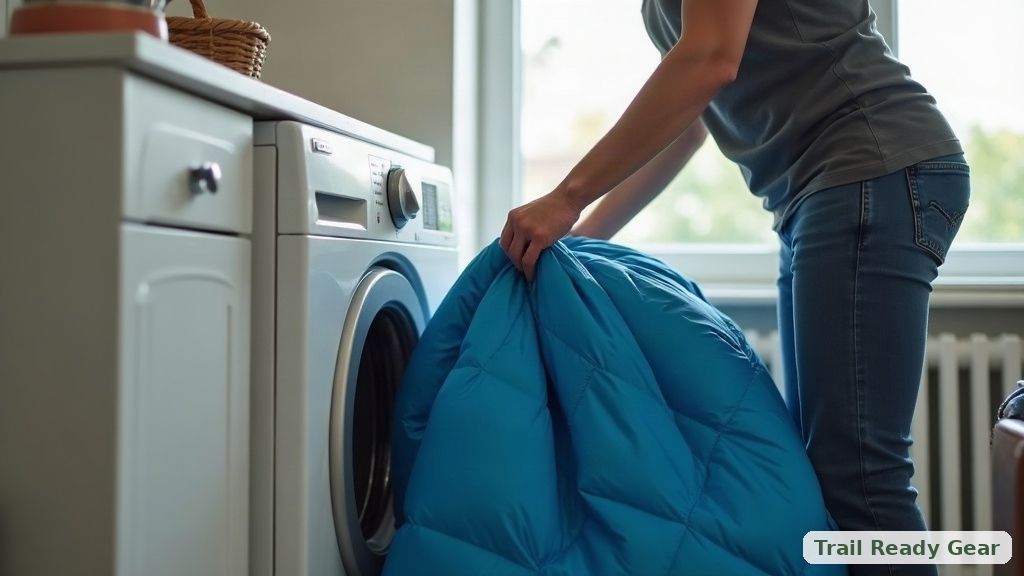
| Machine | Front-loader (NEVER top-loader with agitator) | Front-loader preferred |
| Water | Cold or lukewarm | Cold or lukewarm |
| Cycle | Delicate / gentle | Delicate / gentle |
| Detergent | Down-specific wash (never regular detergent) | Mild non-detergent soap |
| Rinse | Extra rinse cycle — twice if possible | Extra rinse |
Never dry-clean either type — the solvents wreck DWR coatings and can damage down.
Drying is where bags die
Wet loft is fragile. Two rules:
- Low heat, and a lot of time. Down: dryer on low, several hours. Synthetic: dryer on low or air-dry flat. High heat melts synthetic fibers and can scorch shell fabric.
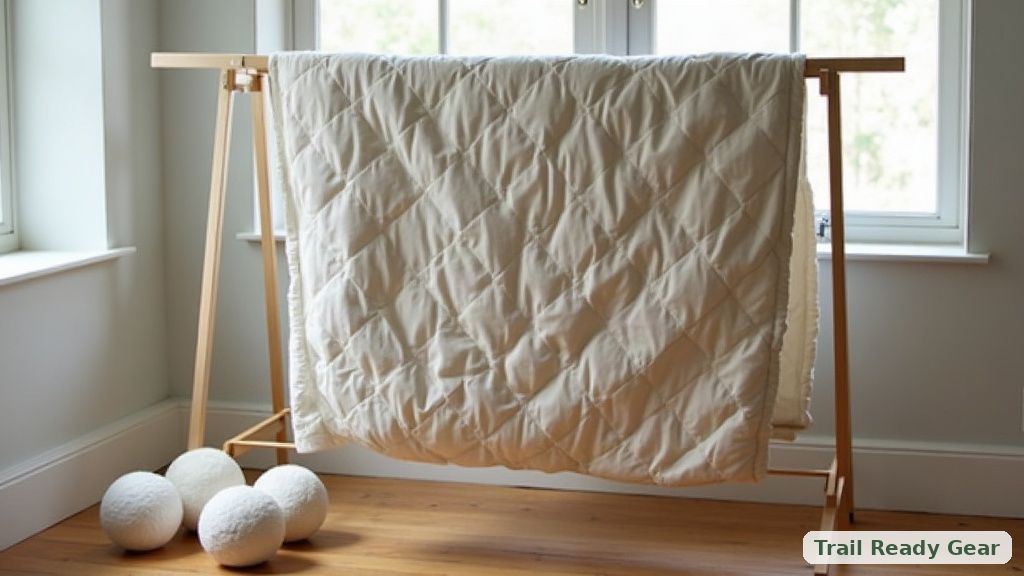
- Down bags need dryer balls (or clean tennis balls). Wet down clumps together as it dries — balls thumping through the drum break the clumps back into loft. Without them, your down mats permanently.
Pull the bag out several times during drying, feel for damp clumps, and knead them apart by hand. It’s not fully dry until no clumps remain and the bag feels evenly puffy. Rushing this step is what causes mildew and permanent loft loss.
Storage: the biggest factor in bag lifespan
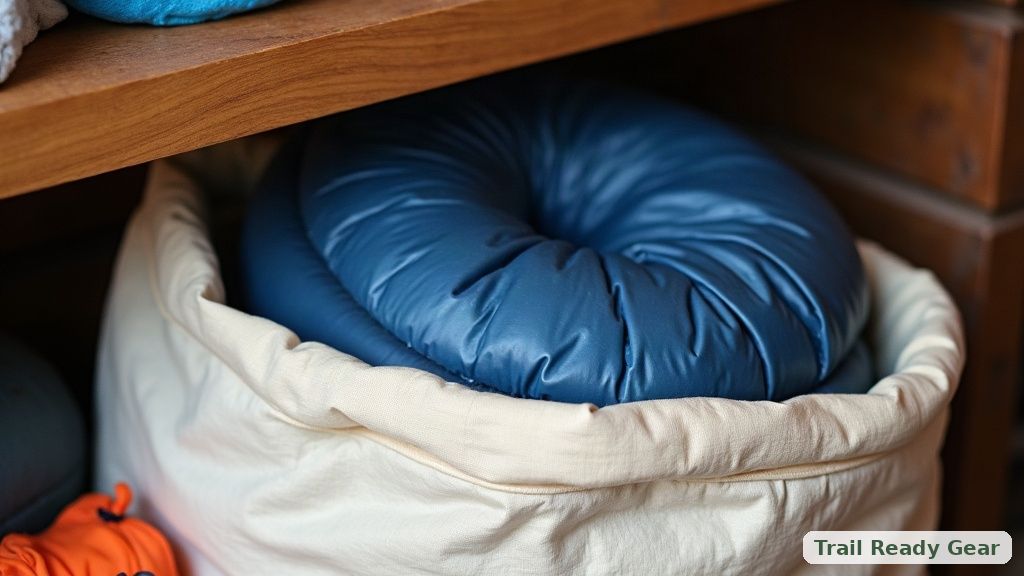
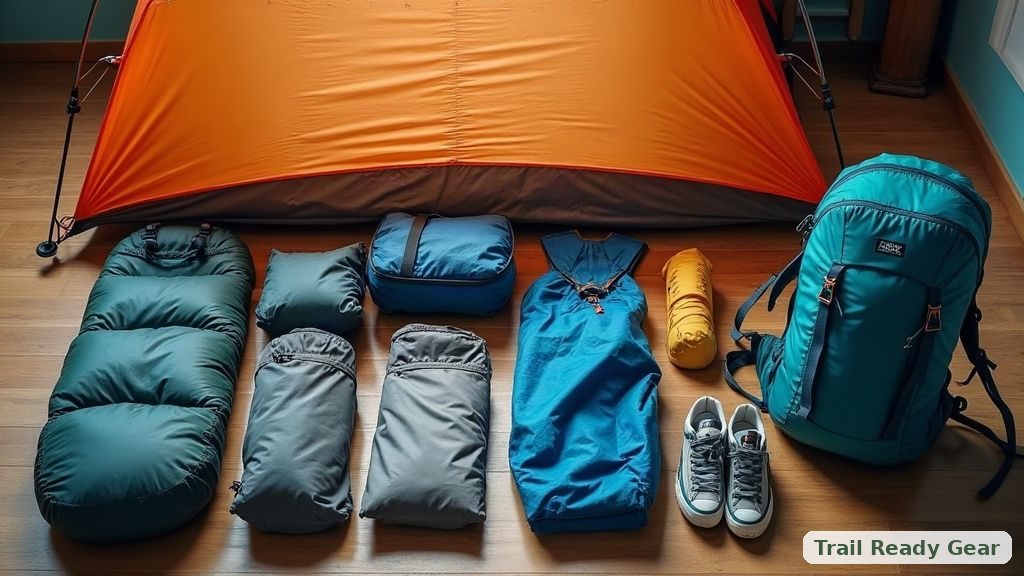
This is where most bags actually die, quietly, in a closet. Never store a sleeping bag in its compression sack. Compression is fine for the trip — it’s not fine for the year in between.
- Store loose in a large mesh or cotton storage sack (the big one that came with a quality bag) or hanging in a closet.
- Dry before storing. Even trace moisture in a compressed bag causes mildew and destroys loft over months.
- Cool, dry place. Attics get too hot; basements often too humid.
- Air it out after every trip before putting it back in storage — an hour draped over a chair.
A properly stored bag lasts a decade. A compression-stored bag can lose measurable warmth in a single season. Our sleeping bag temperature ratings guide and budget bags guide both assume you’re preserving the rating you paid for — this is how.
How do I know if I’ve already damaged the loft?
Lay the bag flat and look at it side-on. A healthy bag is a puffy tube. If it’s flatter than it was when new, or you can see cold spots where the fill has migrated to one side, loft is compromised. Some down bags can be restored by extra drying with balls; permanent matting can’t. Synthetic loft loss is generally permanent — a hard truth.
What about a liner?
A liner (silk, cotton, or synthetic) sits inside the bag and takes the sweat and skin oils instead of the bag lining. Cheaper to wash frequently, and it extends the bag’s rating a little too. Worth it if you use the bag often. See how it fits the full sleep system — bag + pad + liner working together.
📚 Related In-Depth Analysis
- Compare findings with our guide on Backpacking Checklist Beginners.
- Compare findings with our guide on How To Pack A Backpacking Backpack.
📚 Related In-Depth Analysis
- Compare findings with our guide on Lightweight Camp Chairs.
- Compare findings with our guide on How To Stay Warm Backpacking.
🔧 Interactive Planning Tool
Need exact measurements for your setup? Use our Trail Water Weight & Filter Planning Engine to Estimate trail water carry weight and flow rate requirements per mileage.
The bottom line
Wash a sleeping bag rarely, in a front-loader on cold with the right detergent, and dry it slowly on low with balls in the drum. Then — the part that matters most — store it loose in a big sack, not compressed. Do these and a good bag holds its warmth rating for ten years. Skip them and you’ll be shopping for a new one after three winters, wondering why the last one “got cold.”